You can rank across Florida, but not on the map. Google Maps shows businesses close to the person searching, so a Tampa business will rarely appear in the map pack in Orlando, Miami or Jacksonville. Statewide visibility comes from the ordinary search results below the map, through your website. This guide explains why, and how to build a website that ranks across the state.
Learning objectives
By the end of this guide you’ll understand:
- Why Google Maps rankings stay close to your real locations.
- What the ordinary search results can do that the map can’t.
- How to build city pages that rank without being duplicates.
- When a second Business Profile is allowed, and when it’s a risk.
Why the map stays local
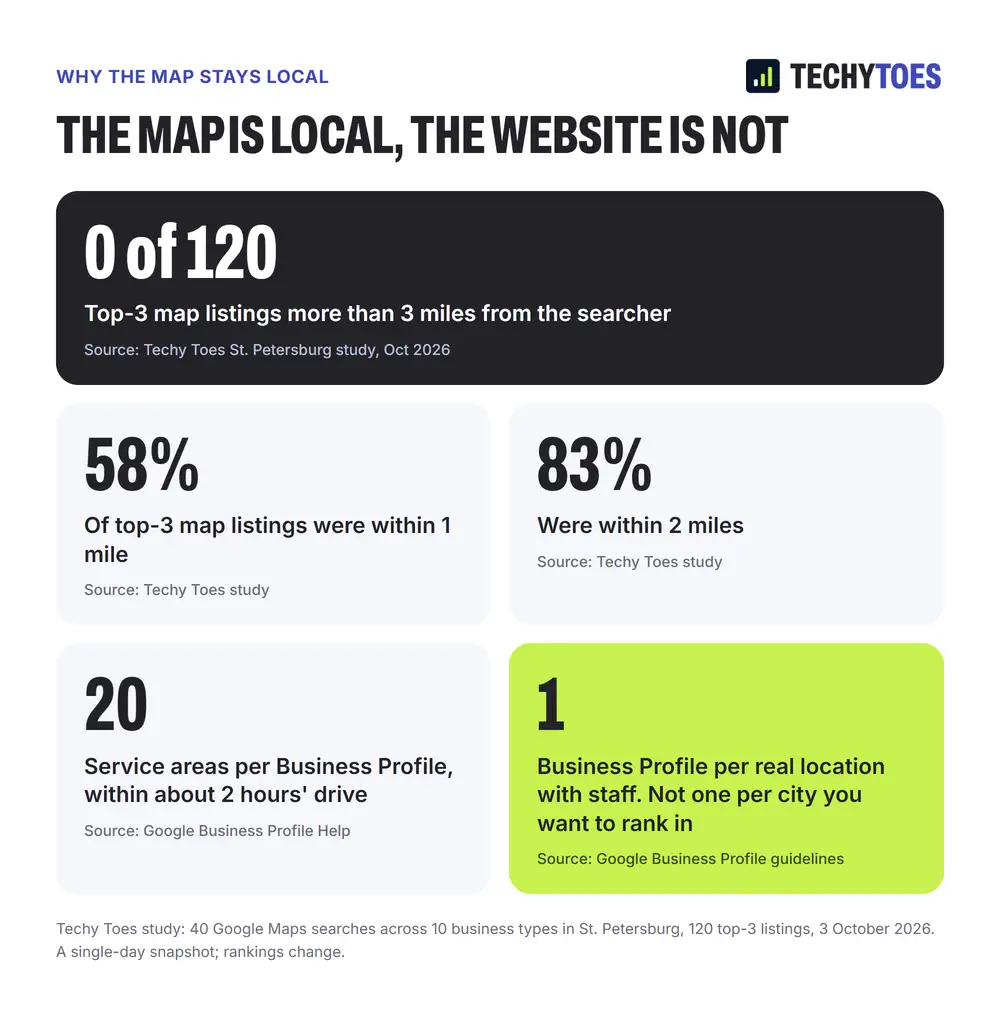
Google ranks map listings on relevance, distance and prominence. Distance is the one you can’t change. In our study of 120 Google Maps top-3 spots in St. Petersburg, 58% of the businesses in the top three were within a mile of the searcher, 83% were within two miles, and none were more than three miles away. A business 200 miles away isn’t going to appear.
Service areas on your Business Profile don’t change that. Google allows up to 20, and recommends keeping them within about two hours’ drive. They tell customers where you go, but they don’t make the map show you in Miami.
How the website ranks statewide
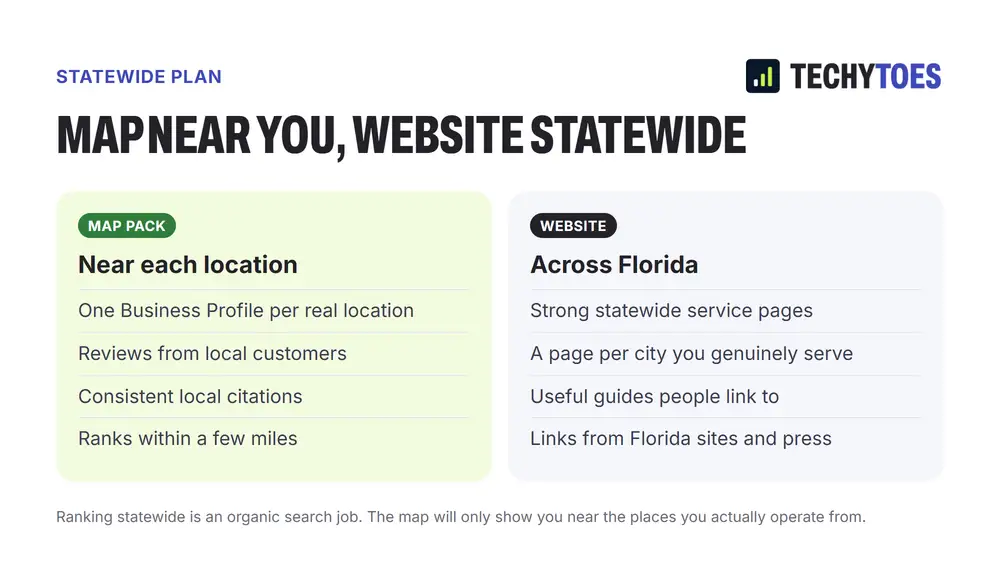
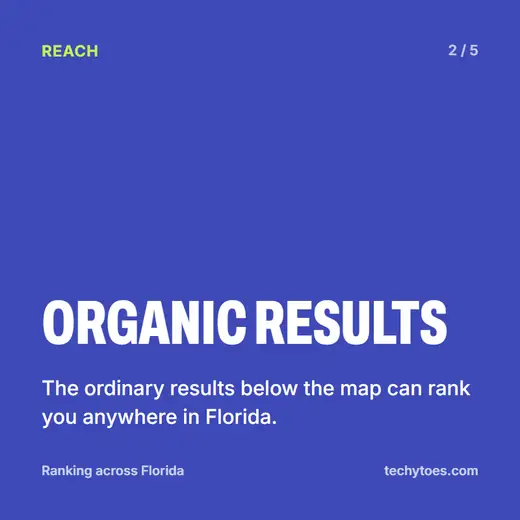
The ordinary search results below the map aren’t tied to distance in the same way. A strong page can rank across Florida for searches like “commercial roofing company Florida” or “pool screen repair Orlando”. That’s where a statewide strategy lives.
Statewide service pages. One strong page per service, covering the whole state: what you do, how you work across Florida, and proof from jobs in different cities. These target searches that include “Florida” or no location at all.
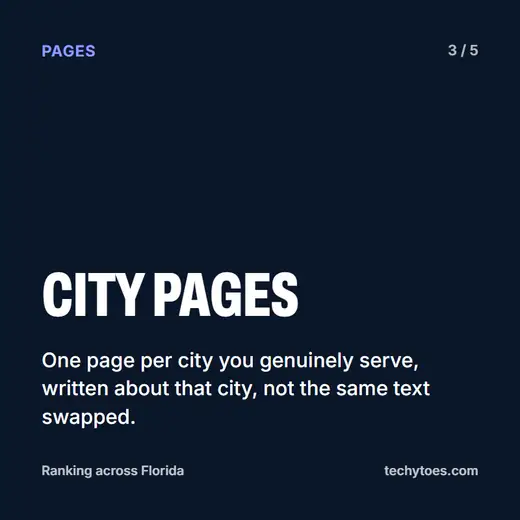
A page for each city you genuinely serve. Orlando, Jacksonville, Miami, Fort Myers, wherever you actually work. Write each one about the city: the projects you’ve done there, how you travel or deliver, and any local rules or conditions. Our Florida SEO services page shows how we approach the state as a whole.
Content that earns links. Guides, cost breakdowns and original data that people in your industry across Florida want to reference. Our own map pack study is an example: original research gives other sites a reason to link to you.
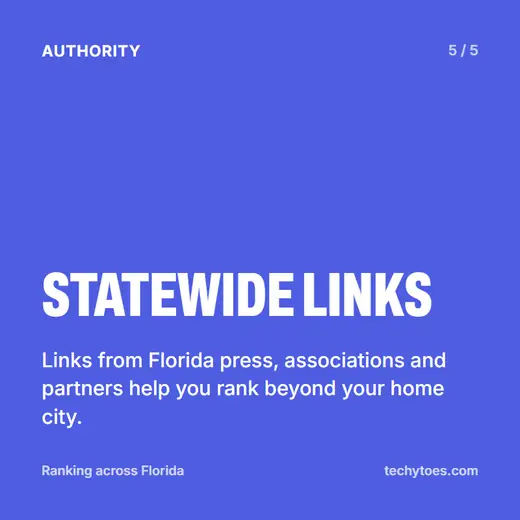
Links from Florida sources. Industry associations, statewide press, suppliers and partners. A link from a respected Florida source helps you rank beyond your home city in a way local directory listings can’t.
When a second location makes sense
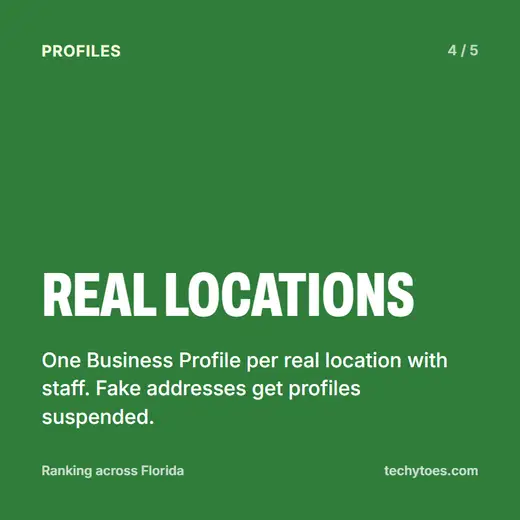
If you open a real office or depot in another Florida city, with staff working there, it can have its own Business Profile and compete on the map there. Don’t create profiles at virtual offices, mailboxes or addresses where you don’t operate. Google’s guidelines don’t allow it, those profiles are often suspended, and a suspension can take your reviews with it.
Avoid copy-and-paste city pages
The most common mistake is fifty city pages with the same text and a different town name. They rarely rank, they can drag down the rest of the site, and they don’t help a customer decide. Our guide to how many service area pages a Tampa Bay business needs explains how to decide which cities deserve a page.
Ranking across Florida: five cards
Key takeaways
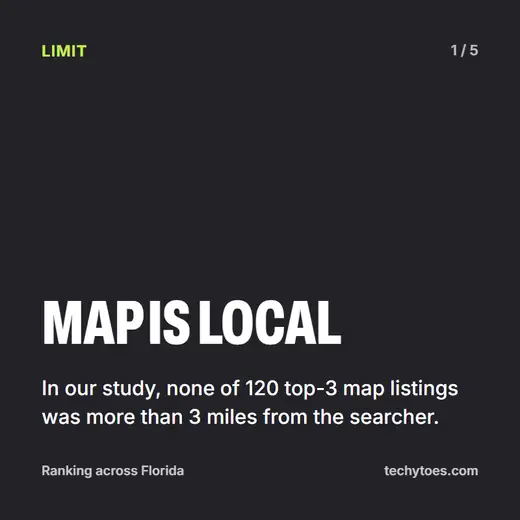
- The map stays local. None of 120 top-3 listings in our study was more than three miles away.
- Statewide reach comes from your website, in the ordinary results below the map.
- Write real city pages, one per city you genuinely serve.
- One profile per real location. Fake addresses risk suspension.
- Earn Florida links with content worth referencing.
Quiz: test what you learned
Five questions on this guide. Tap a question to see the answer.
1. In our study, how many of 120 top-3 map listings were more than three miles from the searcher?
None.
2. Where can a Tampa business rank in Orlando without a location there?
In the ordinary search results below the map, through its website.
3. When can a business have a second Google Business Profile?
When it has a real location with staff in that place. Not at virtual offices or mailboxes.
4. What makes a city page worth having?
Specific content about that city: jobs done there, how you serve it, and local conditions or rules.
5. What kind of links help a business rank across Florida?
Links from respected Florida sources: industry associations, statewide press, suppliers and partners.
Next steps
Read our Florida SEO services page for how we plan statewide campaigns, or start closer to home with St. Petersburg FL SEO and our local SEO services.