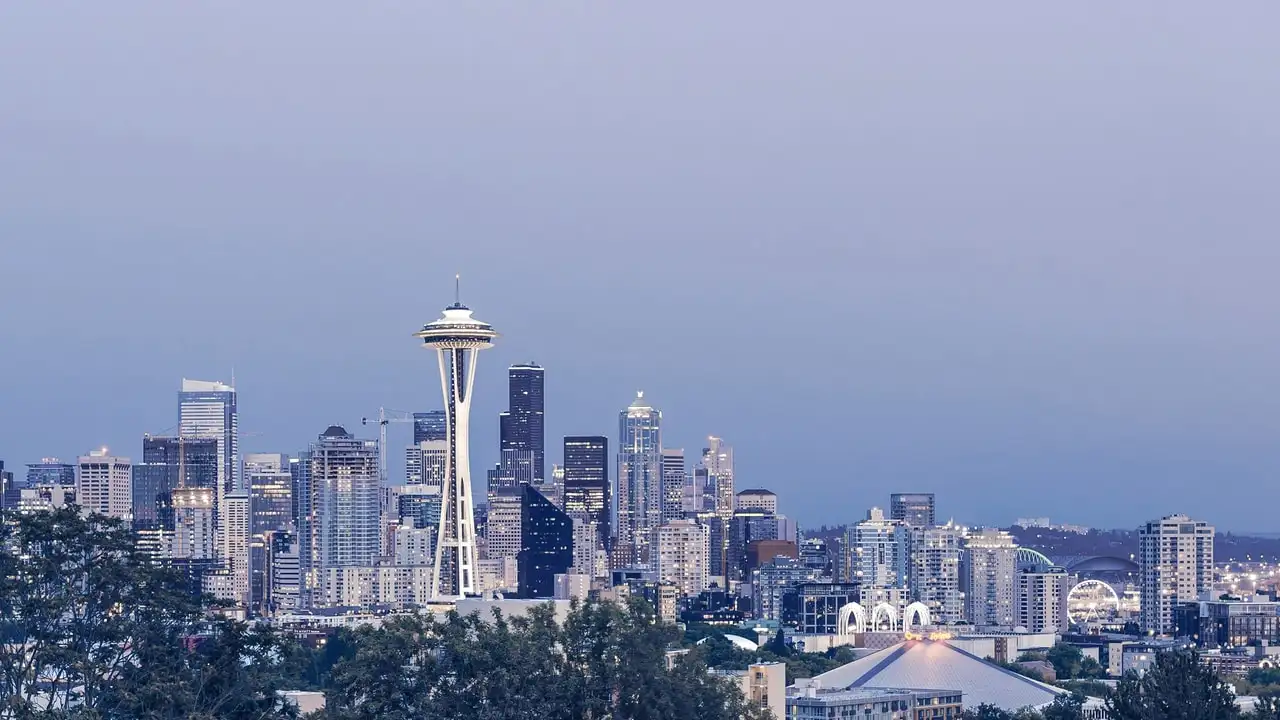
Washington app design runs $16,000–$70,000, reflecting the design system depth this market expects at handoff. Fully offline-capable products for remote operation sit at the upper end because the sync and conflict design is substantially more involved.
Why this looks different in Washington
Washington sets an unusually high internal bar for interface quality, because the region's technology concentration means both your users and your own team have been exposed to exceptional product work for years. That raises expectations on the design system rather than on individual screens, and it means handoff quality matters — Seattle engineering teams expect tokens and specified component states, not a folder of comps to interpret.
The environmental factors are real but different from the sun-and-heat markets. Washington products used outdoors face months of rain, low light and gloved use, and the state's outdoor recreation and marine sectors put products in genuinely remote conditions where connectivity is absent rather than merely poor.
Washington specifics
What actually gets in the way here
These are conditions particular to this market. If they were true everywhere, they would not be worth a page.
01
A high internal bar set by regional product culture
Washington users and engineering teams are exposed to exceptional interface work constantly. Inconsistency registers immediately, and the expectation is a design system rather than a set of screens.
02
Months of rain, low light and gloved outdoor use
Wet screens make touch input unreliable, and low ambient light for much of the year changes contrast requirements. Both are functional constraints for any outdoor product here.
03
Genuinely remote conditions with no connectivity at all
Washington's outdoor recreation, marine and forestry sectors operate where there is no signal for extended periods, not merely intermittent coverage.
Our approach
How we run app design in Washington
The same four stages we run everywhere, applied to this market's conditions. The sequence matters more than any individual tactic.
01
Core task and frequency analysis
We establish what the app is genuinely hired to do and how often each action occurs, then rank them. This produces the navigation hierarchy and, more usefully, an explicit list of what will deliberately be made less prominent.
02
Flows, states and information architecture
End-to-end flows for every significant task including failure and recovery paths, with the empty, loading, error and offline states specified per screen rather than deferred to development.
03
Design system and screen design
Tokens and components defined first, then screens assembled from them. Building the system before the screens means the fortieth screen is consistent by construction rather than by review.
04
Prototype, test, hand off
Interactive prototypes tested with real users on the core flows, revised, then handed to engineering with component specifications, states and behavioural notes — not a folder of static images requiring interpretation.
Local tip
Test outdoor products in the rain with wet hands. Capacitive touch behaves genuinely differently on a wet screen, and for any Washington product used outside it invalidates touch decisions that seemed fine in a dry review.
How we would measure it
Measured on task completion in real conditions, data integrity across extended offline periods and batch reconnection, and component state coverage in the delivered design system.
Proof
What we can stand behind
One documented client result, plus the market data explaining the conditions app design operates in. Each figure is labelled with what it is.
84% organic traffic increase in 3 months Documented client result
of Google queries now return an AI Overview
40%+ of Google queries now return an AI Overview HubSpot, 2026
fewer businesses shown in AI-generated local packs than classic map results
68% fewer businesses shown in AI-generated local packs than classic map results Industry research, 2026
of "near me" searchers visit a business within 24 hours
76% of "near me" searchers visit a business within 24 hours Shopify Local SEO Statistics, 2026
better conversion from fully optimised Google Business Profiles
1.8x better conversion from fully optimised Google Business Profiles Whitespark, 2026
The 84% figure is a documented result for a single client, not a projection of typical performance in this market. The figures beneath it are published market statistics from the sources named, included because they explain the environment rather than because they are our results.
Nearby markets
App Design in markets adjacent to Washington
Adjacent markets are not interchangeable — each of these pages is written around that market's own competitive conditions.
Why is handoff quality particularly important for Washington engineering teams?
Because the regional standard is high and those teams expect to implement a system rather than interpret screens. Seattle and Eastside engineering teams have typically worked with proper design systems and will find a folder of static comps frustrating and ambiguous — and reasonably so, since it forces them to infer rules from examples and guarantees inconsistency by the fortieth screen. What they expect is design tokens for type, spacing, colour and elevation, every component specified across all its states including loading, empty, error and disabled, documented interaction behaviour, and an interactive prototype demonstrating intent rather than describing it. Engineering should also be involved from the flow-mapping stage, because these teams have strong opinions about what is expensive to build and ignoring that produces designs that get quietly rebuilt during implementation.
What does Washington weather require from an outdoor product?
Design decisions for wet screens and low light, which are the opposite of what bright-sun markets need. Rain makes capacitive touch genuinely unreliable — wet screens register phantom taps and miss real ones — so primary actions need large, well-spaced targets and destructive actions need to be somewhere a spurious touch will not find them, ideally with confirmation. Low ambient light for months of the year means the interface must be readable without being harsh in a dark environment, which is a different contrast problem from surviving direct sun. Gloved use is common through the wet season too. None of this appears in a usability session held indoors in summer, which is why we test outdoor products in the conditions they will actually be used in.
How should genuinely remote use be designed for?
As full offline operation for extended periods, which is a stronger requirement than intermittent connectivity handling. Washington's outdoor recreation, marine, forestry and rural operations put products in places with no signal for hours or days rather than minutes — so the product has to function completely without a connection, not merely queue a few actions. Practically that means all necessary data pre-fetched before the user leaves coverage, with an explicit and honest indication of what is available offline; every action completing locally; and a sync process on return that handles a large batch of accumulated changes including conflicts. The failure mode we see most is a product designed for intermittent connectivity that assumes reconnection within minutes and behaves badly after eight hours offline.
Does the Seattle technology environment change how much testing is worthwhile?
It raises the value of testing rather than reducing it, because the competitive bar is higher and users have more alternatives. Five users per distinct user type before engineering remains the right investment — severe usability problems are common rather than rare, and five testers will find issues affecting a third of users with high probability. What changes in this market is that stakeholders are frequently more familiar with product process and more willing to fund it, so getting prototype testing into the plan is usually an easier conversation than elsewhere. The caution worth stating is the same everywhere: five users gives you qualitative signal about severe problems, not quantitative confidence about which of two layouts performs better, and treating it as the latter is a genuine misuse.
Coverage area
Serving Washington and Surrounding Neighborhoods
Our team works from St. Petersburg, FL, and covers
Washington alongside the surrounding communities below.
Neighborhoods and communities we cover
Downtown Seattle
Capitol Hill
Ballard
Fremont
Downtown Bellevue
Tacoma Waterfront
Zip codes served
98101
99201
98402
98004
Get clear on the one job your product is hired to do in Washington
Walk us through your product and we will map the task frequency and the flows worth testing first. It usually surfaces at least one navigation assumption that has been quietly costing you retention.