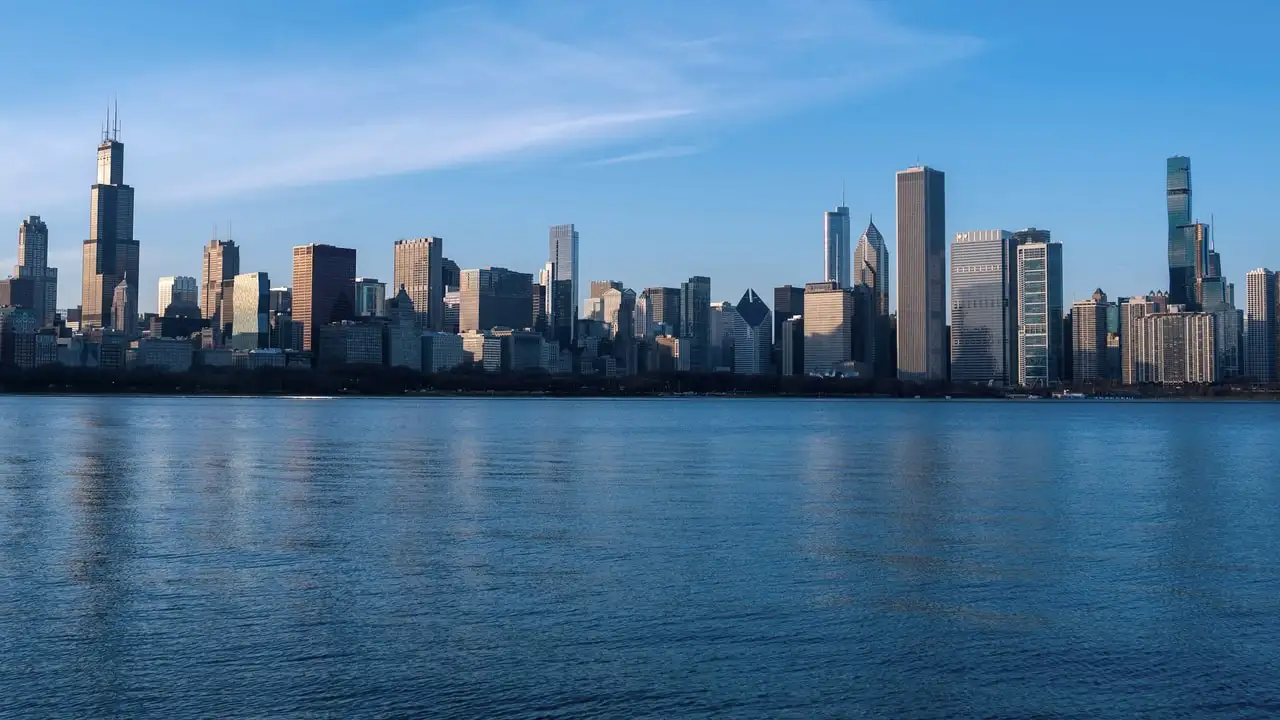
Illinois AI SEO runs $1,400–$3,400 per month. Specialised industrial and manufacturing content sits at the upper end because it requires genuine subject-matter research, and it is also where the least competition exists.
Why this looks different in Illinois
Illinois has an AI search dynamic worth noting: several established Chicago firms have genuine content-marketing depth, which is unusual in a local market and means the broad category citations here are better defended than in most of the places we work. That raises the bar on general queries and makes the specific ones disproportionately valuable.
The openings are the ones the city's structure creates. Chicago residents search Logan Square and Lincoln Park as primary locators, and nobody has built the neighbourhood content a generative system could cite for those. The collar counties are similar — Naperville and Schaumburg are substantial markets with comparatively little well-documented local content. And Illinois's manufacturing and industrial base produces exactly the low-volume, high-value technical queries that generative systems handle well and almost nobody has answered properly.
Illinois specifics
What actually gets in the way here
These are conditions particular to this market. If they were true everywhere, they would not be worth a page.
01
Better-defended broad citations than most local markets
Several established Chicago firms have real content depth, so the general category answers here are frequently already claimed by well-documented sources. Competing there requires more than most local businesses can commit.
02
Neighbourhood and collar-county questions with nothing local to cite
Because neighbourhood and suburban content is thin, assistants answering about services in Logan Square or Naperville default to directories. Those are open slots in a medium that cites three sources rather than ten.
03
Industrial B2B queries nobody has written for
Illinois manufacturing and industrial supply generates specialised queries with tiny volumes and very high contract values. Agencies filtering by search volume discard them, so the content that would earn those citations does not exist.
Our approach
How we run ai seo in Illinois
The same four stages we run everywhere, applied to this market's conditions. The sequence matters more than any individual tactic.
01
Generative visibility baseline
We build a prompt set from how buyers in your category actually ask, then record who gets cited today across the major assistants and AI Overviews for each one. This is the before picture, and it usually reveals that a competitor nobody was worried about is being named repeatedly.
02
Retrievability and entity remediation
We fix what stops your content from being read and resolved: client-side rendering of key content, facts trapped in images, missing or contradictory Organization data, and crawler access rules. This is unglamorous groundwork with no visible output, and skipping it makes everything after it ineffective.
03
Answer-first content build
We restructure existing high-value pages and write new ones targeting the prompts where no source is currently cited. Each is built around self-contained, specific, attributable passages — the format generative systems can actually lift.
04
Citation monitoring and iteration
Monthly re-testing of the prompt set, tracked against baseline, alongside AI Overview appearance rates and assistant referral traffic. Generative surfaces change fast and without announcements, so this is an iteration loop rather than a project with an end date.
Local tip
Ask an assistant about your category in Chicago, then in Logan Square, then in Naperville. The city answer will usually cite a content-heavy agency or established competitor; the other two frequently cite nobody — and that difference is your content priority list, in order.
How we would measure it
Citation share tracked separately for city, neighbourhood, suburban and specialised technical prompts, since these move at very different speeds and a combined figure would be dominated by the hardest.
Proof
What we can stand behind
One documented client result, plus the market data explaining the conditions ai seo operates in. Each figure is labelled with what it is.
84% organic traffic increase in 3 months Documented client result
of Google queries now return an AI Overview
40%+ of Google queries now return an AI Overview HubSpot, 2026
fewer businesses shown in AI-generated local packs than classic map results
68% fewer businesses shown in AI-generated local packs than classic map results Industry research, 2026
of "near me" searchers visit a business within 24 hours
76% of "near me" searchers visit a business within 24 hours Shopify Local SEO Statistics, 2026
better conversion from fully optimised Google Business Profiles
1.8x better conversion from fully optimised Google Business Profiles Whitespark, 2026
The 84% figure is a documented result for a single client, not a projection of typical performance in this market. The figures beneath it are published market statistics from the sources named, included because they explain the environment rather than because they are our results.
Nearby markets
AI SEO in markets adjacent to Illinois
Adjacent markets are not interchangeable — each of these pages is written around that market's own competitive conditions.
Why are broad Chicago AI citations harder to win than in other local markets?
Because several of the established firms here have genuine content-marketing depth, which is unusual at a local level. They produce substantial, well-structured content, and that is precisely the material generative systems can extract and attribute confidently — so the broad Chicago category answers are frequently already served by credible sources. In most local markets the competing content is thin enough that being merely good is enough; here it is not. The practical consequence is prioritisation rather than discouragement: the general query is a longer project, while the neighbourhood, suburban and specialised queries remain genuinely open. It also means any agency telling you Chicago AI search is wide open has not checked, because that content depth is easy to verify in an afternoon.
What makes Chicago neighbourhood queries an open AI opportunity?
The mismatch between how strongly residents search by neighbourhood and how little content exists about those neighbourhoods. Chicagoans describe themselves as being from Logan Square, Lincoln Park or Pilsen and search accordingly, with genuine volume behind those terms — but businesses either have no neighbourhood content or have location-modified duplicates of their service pages, which gives a retrieval system nothing distinguishable to quote. Ask an assistant about a service in Wicker Park specifically and the answer is usually generic or directory-sourced. Because generative answers cite three or four sources rather than listing ten, an uncontested neighbourhood query is worth more than a contested city one. The requirement is content that says something true about serving that neighbourhood — which is also exactly what makes it rank conventionally, so the work does double duty.
How does AI SEO apply to an Illinois manufacturing or industrial business?
It suits that sector unusually well, for reasons that follow from its search characteristics. Illinois has a deep manufacturing and industrial supply base where queries have very low volume and very high contract values — a handful of monthly searches for a specialised capability can represent more revenue than thousands of consumer queries. Generative systems extract confidently from precise, factual, technically credible content, which is exactly what this sector can produce and rarely does. The reason it does not exist is that agencies prioritising by search volume discard these terms, so nobody has written the citable answer. These buyers also research over long cycles with multiple stakeholders, so a cited answer gets consulted repeatedly. The work is genuinely technical writing rather than marketing copy, and it fails if the reader — who usually knows the subject better than the writer — can tell it was written by somebody who does not.
Are the collar counties a better AI target than Chicago itself?
Frequently yes, for the same structural reason they are a better conventional SEO target. Naperville, Schaumburg, Wheaton and the surrounding Western Suburbs form a large, affluent market with its own commercial ecosystem, and it has comparatively little well-documented local content — because the established agencies compete in the city and national attention goes there too. So an assistant answering a question about a service in Naperville has thin material to draw on, while the equivalent Chicago question is likely already served by one of the content-heavy incumbents. Given that generative answers cite few sources, an open suburban slot is worth more than a contested urban one. And the audience there is affluent and commercially active, so the enquiries that result are not a consolation prize for missing the city.
Coverage area
Serving Illinois and Surrounding Neighborhoods
Our team works from St. Petersburg, FL, and covers
Illinois alongside the surrounding communities below.
Neighborhoods and communities we cover
The Loop
Lincoln Park
Wicker Park
Logan Square
Hyde Park (Chicago)
Downtown Naperville
Zip codes served
60601
60540
60505
62701
Find out who the AI names when someone asks about your category in Illinois
We will run your buyers' real questions through the major assistants and send you the citation report — who gets named, who does not, and which questions currently have no cited source at all.